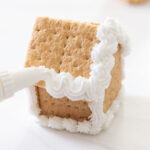
Gingerbread House Royal Icing
The perfect royal icing to use when making gingerbread houses, it holds shape for piping as well!
Servings 2 cups
Calories 1195kcal
Equipment
- electric mixer
Ingredients
- 3 large egg whites room temperature, (or 1/2 cup liquid egg whites) NOTE: The 2X/3X above only updates the main amount, so if doubling your recipe and using liquid egg whites, use 1 cup liquid egg whites as a substitute for 6 large egg whites.
- 1/2 teaspoon cream of tartar
- 5 cups powdered sugar (also called confectioners' sugar)
Instructions
- In a large bowl, using an electric mixer fitted with the whisk attachment (on medium speed), beat together egg whites and cream of tartar. Add powdered sugar, 1 cup at a time and beat for about 3-4 minutes or until mixture is thick and fluffy, and has fairly stiff peaks. Stop the mixer to scrape down the bowl periodically, as needed.
- You may need to add more powdered sugar if your icing is too loose, do so by adding more powdered sugar in 1/4 cup increments, until desired consistency I achieved. Humidity/weather can also cause icing to be too loose/runny. You want to be sure you have stiff peaks, so increase powdered sugar until it's stiff. We find 4 1/2 - 5 cups to do the trick, but adjust accordingly. You want to be able to pull a knife through the icing and it doesn't run back together. This will ensure that it holds the shape you want when piped! If too thick to pipe, add just a teaspoon or two of water (at a time) to thin the icing out.
- Since it dries quickly, keep the icing covered with a damp cloth while working. Ideally, use the royal icing right away. If I starts to set up while you are working on your gingerbread house, just give it a good stir to soften it back up.
Notes
This is the perfect royal icing for gingerbread houses. It makes a royal icing that hardens when dry and pipes pretty ruffled edges on your houses, it will hold it's shape and not be too runny or loose!
Nutrition
Calories: 1195kcal | Carbohydrates: 300g | Protein: 5g | Fat: 1g | Sodium: 89mg | Potassium: 210mg | Sugar: 294g | Calcium: 7mg | Iron: 1mg